
2009 kommer att gå till historien som det år när USA:s stormaktshegemoni bröts och utbyttes mot en värld med flera globala aktörer, främst bland dem Kina.
Kina börjar ta sig ton, inte bara i kampen om den USA-dominerade Internationella Valutafonden utan på en rad områden.
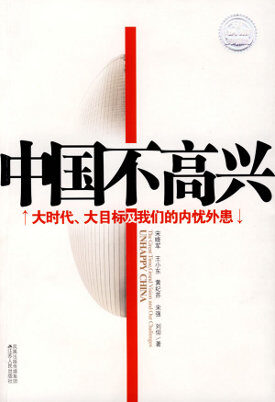
Hur ser kineserna på sig själva och sitt samhälle? Det är något som vi kommer att få anledning att intressera oss för alltmer under kommande år. 中国不高兴,boken “Kina Är Missnöjt”, är en intressant debattbok som just har publicerats i Kina, skriven av 宋晓军,och fyra andra som en efterföljare på 中国可以说不, Kina Kan Säga Nej från 1996.
Jag har ännu inte lyckats få tag på något exemplar men letar med ljus och lykta i de kinesiska bokhandlarna här i Silicon Valley.
Intressant nog har boken uppmärksammats i den amerikanska pressen och Jason Dean recenserar boken i Wall Street Journal:Book Stokes Nationalism in China – WSJ.com
BEIJING — A hot-selling new book that excoriates the U.S. and calls for China to be more assertive is fueling debate among Chinese about nationalism and their country’s role in the world. “Unhappy China” is a collection of essays by five authors who argue that China has been too deferential to a Western world that is hostile toward it.
The authors, a group of scholars, single out the U.S. for special scorn, and say their book’s message — aimed largely at younger Chinese — has been helped by the economic crisis.
Fu Qi och Li Huizi ger en kinesisk syn på boken på nyhetsbyrån Xinhua: Book rallying for social change fails to inspire the masses
“Unhappy China – The Great Time, Grand Vision and Our Challenges,” intends to “spur, stimulate and wake up” the intellectuals, according to Song Qiang and Huang Jisu, two of a group of five authors, dubbed by analysts as “grassroots intellectuals.” The other three are Song Xiaojun, Wang Xiaodong and Liu Yang.
The book argues that “with Chinese national strength growing at an unprecedented rate, China should stop self-debasing and come to recognize the fact that it has the power to lead the world, and the necessity to break away from western influence.”
Zhang was also one of the authors of the 1996 bestseller “China Can Say No.”
Austin Ramzay skriver om boken i Time Magazine :A New Book Reveals Why China Is Unhappy
..In talking with Wang and Song it’s easy to get the feeling that it’s not so much China that’s unhappy and angry, but the authors themselves. The brand of nationalism they preach is still a potent force, but they seem more upset about rivalries at home than abroad. Wang cautions that the book’s title is a bit of a ruse. “To be frank, those words in the title Unhappy China are just for the purpose of promoting the book in the marketplace,” he says. “We didn’t choose them. It was the people selling the book who chose the title, because it would sell well.” If they could chose a title, Wang says it would have been China’s Goals for the Next 30 Years or something similar. But who would want to read that?
Det är ironiskt att vi nu går mot ett nytt kallt krig mellan två superpatriotiska länder, USA och Kina. Det nya Kalla Kriget kommer att bli helt olikt det mellan USA och USSR främst för att den kinesiska ekonomin är utgör ett riktigt hot mot den amerikanska ekonomin, något den sovjetiska aldrig gjorde.
Än så länge är de båda kontrahenterna utomordentligt artiga mot varandra men det kan mycket snart komma att förändras speciellt eftersom allt fler amerikanska jobb skeppas utomlands till Kina och Indien.
Och det är inte bara låglönejobb utan även allt fler forskningsjobb.
Vad kineserna tycker och tänker är därför något som kommer att bli allt viktigare framöver.
Technorati Tags: 中国不高兴,Kina Är Missnöjt, Kina, Kina och USA, 中国可以说不, Obama Kina, Kina Böcker, China Books
Svenska bloggar om: 中国不高兴,Kina Är Missnöjt, Kina, Kina och USA, 中国可以说不, Obama Kina, Kina Böcker, China Books